I read White Fang as a bedtime story.
I love a good beer.
I ate sauerkraut out of the jar as an afterschool snack.
And the Missouri. Oh, how I love that rollin’ river.
Friedrich Wilhelm Reifenrath was born in Birken, Germany, on April 17, 1834. At the age of eighteen, he was to be conscripted into the army of Otto von Bismarck. Instead, in the dead of night before his scheduled induction, he slipped across border to Holland and began making his way to the United States.
He arrived in New York in 1853. After spending a few years in New York, Philadelphia, and Cincinnati, he – and eventually his brothers – chased their fate and fortune by sailing around the tip of South America, through Magellan’s Strait, and to California.
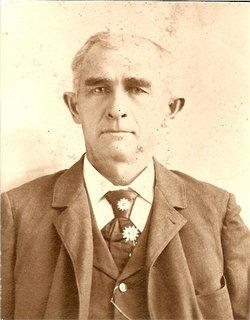
And somehow – they found it. Not in gold, but in beer.
While others dug and sifted, the Reifenraths brewed. The miners, it turned out, were more reliable than gold. And for a time, they made a small fortune selling beer to men who had come West with nothing, and were willing to spend whatever they had to forget it.
But nothing lasts forever.
They sold their brewery with the intention of building another along a planned railroad line. The railroad never came. The foundation was laid and then abandoned.
And, just like that, the brothers scattered.
One to South America.
One to Wisconsin.
And one – Friedrich – to Nebraska, by way of Alaska.
Friedrich returned to the States and claimed a 2,000 acre homestead along the Missouri River at Brookey Bottom, near where Bow Creek flows into the Missouri – ground where Lewis and Clark camped sixty years earlier.
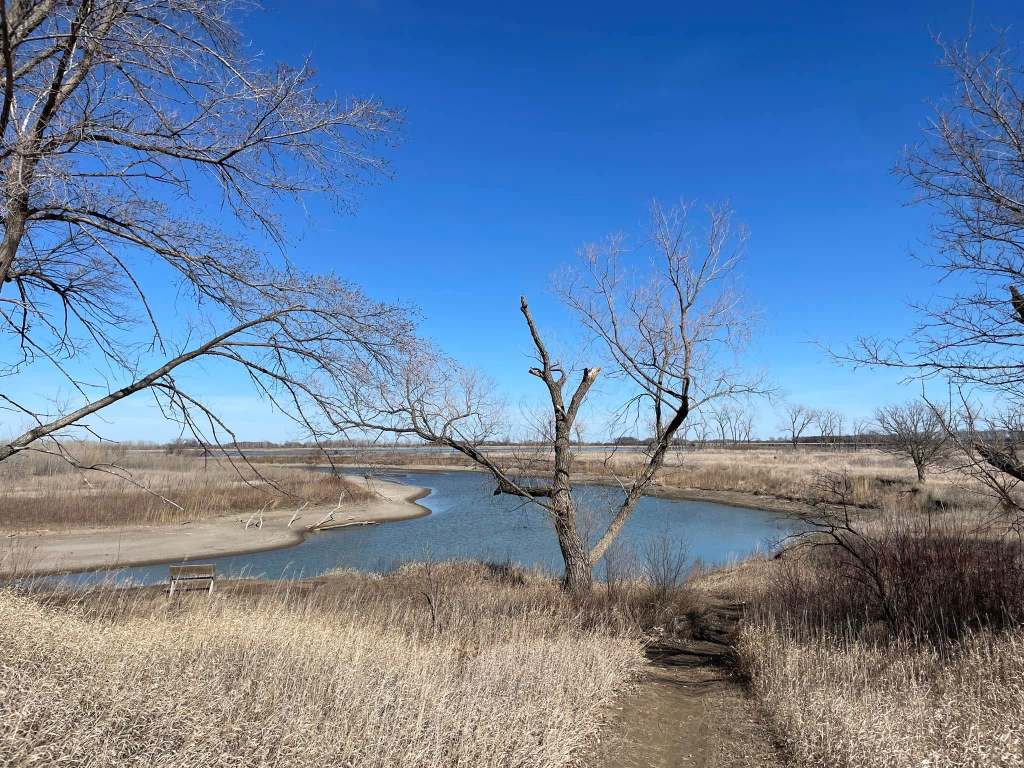
In 1868, he married Elizabeth Becker from Guttenberg, Iowa. They had nine children.
Brookey Bottom was, for all practical purposes, a wilderness – isolated, uncertain, and dangerous. But they stayed.
Or, rather, she stayed.
Because Friedrich had this habit of leaving.
Not once. Not twice. But NINE times, he crossed the Atlantic, returning to Germany again and again and again – leaving behind his wife and children on a remote Nebraska homestead with almost no protection and very few neighbors.
That is unhinged.
Early on, a neighbor who headed to Sioux City to get supplies came home to find his entire family massacred. It was said to have been done by Natives – but more likely by robbers pretending to be. Months later, a Native man was seen at the Fort Randall agency wearing the neighbor’s wife’s shoes. He said that he had traded for them – with a white man. No one believed him.
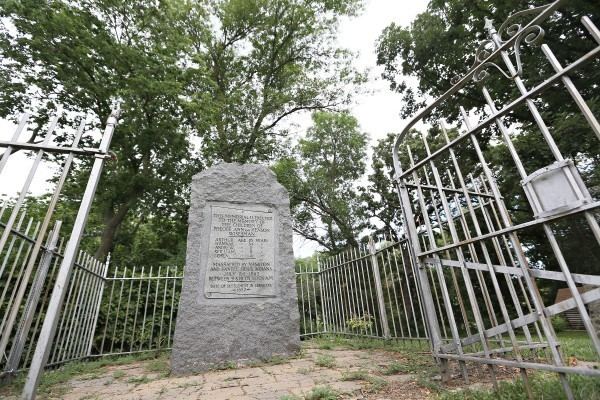
Travel was always by horse and wagon. They crossed the Missouri to trade in Vermillion and used the stars as guides at night.
The River was relentless. The cattle were turned loose to roam the bluffs in the summer, were rounded up in winter, and were returned to the bottom in the spring. One spring, the Missouri flooded, and cows wandered out into the flood waters. Then a blizzard struck. The floodwaters froze, and calving cows were stranded in the ice. Half-frozen, trapped between water and snow. Friedrich and his sons went out after them, into the flood and storm, with ice picks in hand, chipping through frozen water to pull the animals back to safety. Most of the cows were lost.
Over time, the River slowly ate away at the homestead. The family moved buildings again and again, retreating from the edge. Entire orchards disappeared. What was once theirs now lies across the River, on the South Dakota side.
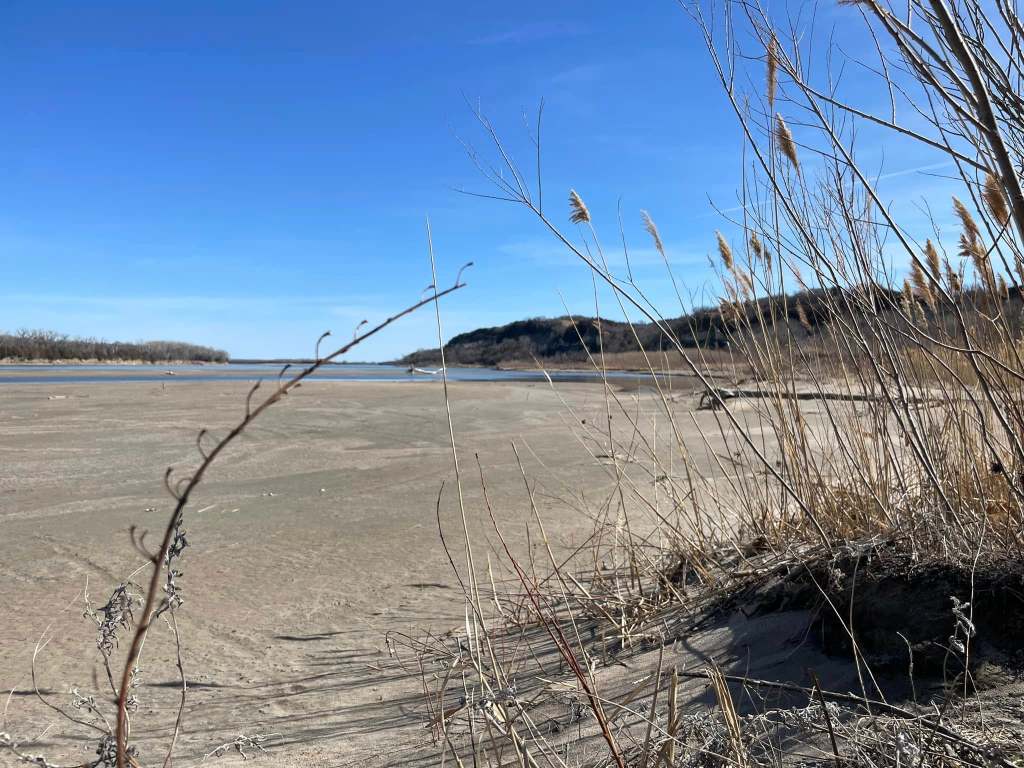
And still – the next generation came.
Francis Gerlach Reifenrath was born at the Brookey Bottom farm in 1875. He married Theresia Mueller in 1907. They raised a family that included a doctor, a priest, and Albert “Ab” Reifenrath – my grandfather – born in 1910.
The challenges did not end with land and weather. When WWI broke out in 1917, the family still spoke almost entirely in German. Stores, schools, newspapers – German. They were told to speak English, and buy war bonds, or face criminal consequences.
And then came the Great Depression.
For a young man trying to make a life, there was no work to be found. So Ab took what he could get – odd jobs, hired work, anything that paid.
One of those jobs took him to a ranch near Fort Randall. There, he was hired to kill rattlesnakes. The old abandoned church on the fort grounds was infested, and he was paid by the snake – five cents apiece. On another day, working that same land, he lost a mule to a rattlesnake bite.
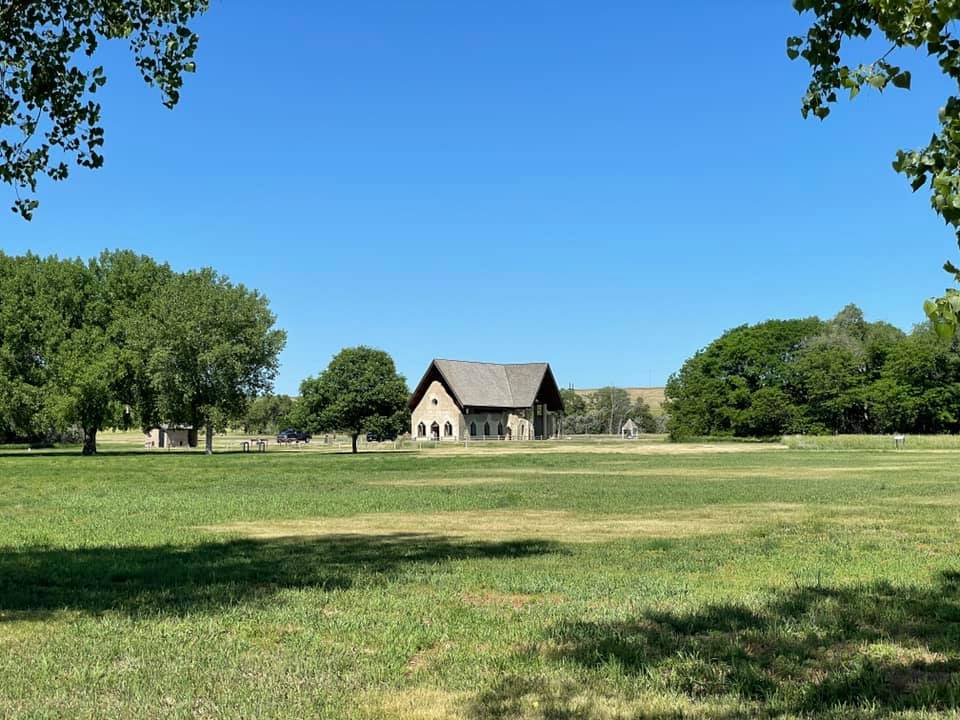
In the winter of 1936, he worked as a hired man on a ranch where the owner had left for a WPA job, putting the operation, his wife, and his children, in the hands of two young men.
Ab slept in the barn. It was a brutal winter. They nearly starved or froze to death. Somewhere in that cold, he got into a fight with his barnmate – and won. His prize was an ammonite fossil found in the banks of the Niobrara River.
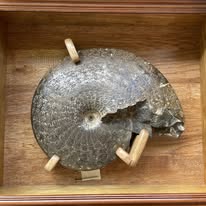
Ab married Cecilia in 1941. In 1942, my dad was born, the first Reifenrath to attend college, only because he happened to run faster than your average kid from the Nebraska sandhills. And from there, things began to change: a doctor, a lawyer, a professor, and a physical therapist.
Ab and Cel never had much. In lean years, Ab would go down to the River and trap. He’d sell the furs to pay the rent. Eventually, they probably could have bought the farm that they rented, but, after the Great Depression, I wonder whether that seemed too great a risk.
It occurs to me that Friedrich was not afraid of much. In All Quiet on the Western Front, Remarque writes, “We Germans fear God, and none else in the whole world!”
Friedrich crossed oceans. Chased gold. Built and abandoned fortunes. Lived on a river that could – and did – take everything without warning.
But he was afraid of one thing: being told what to do.
He would not be conscripted. He would not submit to a life chosen for him. If there was risk, it had to be on his terms.
Friedrich’s life was defined by movement – by risk, by chase, by departure – but generations that followed learned a different lesson.
The River, the winter, the Great Depression. They’ll take what they want.
And so, sometimes, survival depends on holding fast to what little you have, instead of chasing what might be.
That instinct has worked its way quietly into my family and into me.
You can still feel it sometimes.
 Prairie Papers & Effects
Leave a comment