My dad wanted to name me Heidi, but, my mom and my sister won, and I was named instead for the heroine in The Thorn Birds. The Irish first name paired a little awkwardly with “Reifenrath,” but it works beautifully now as a “Joyce by Choice.” My dad – proud of his German heritage – has only somewhat begrudgingly accepted my new Irish identity and last name.
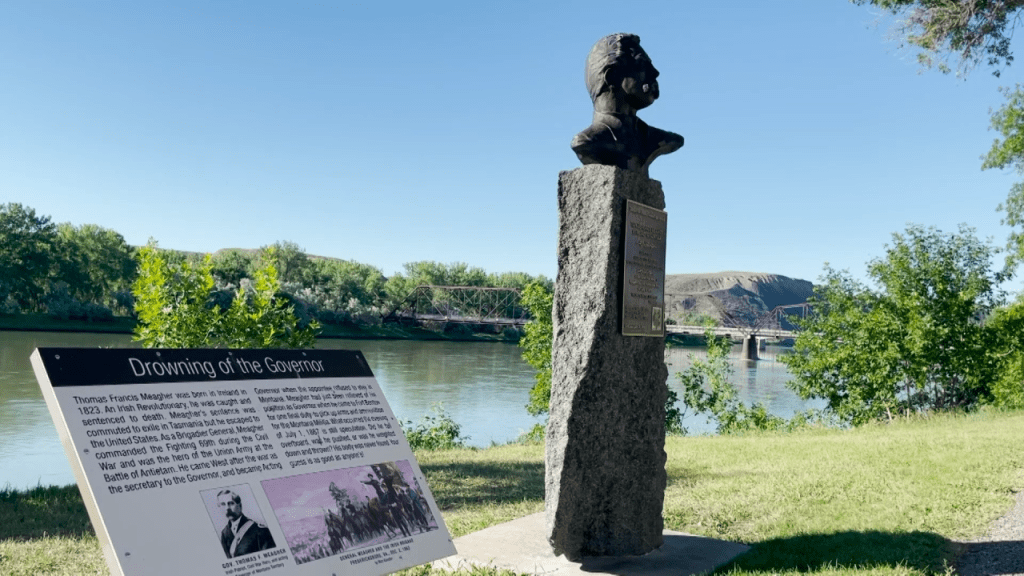
But still, there’s a statue in Fort Benton, Montana, for Thomas Francis Meagher.
Knowing that I love Fort Benton, my dad grumbled and suggested I read “The Immortal Irishman” by Timothy Egan about the Irish revolutionary, Australian escapee, Civil War soldier, and first territorial governor of Montana.
So I read it.
And that was enough to send me down the rabbit hole.
Were the Joyces Great Hunger People?
Short answer: Yes.
Long answer: Well, here it goes. . . .
As Timothy Egan begins the story of Thomas Francis Meagher, so do I begin the story of the Joyces:
“For the better part of seven centuries, to be Irish in Ireland was to live in a land not your own. You called a lake next to your family home by one name, and the occupiers gave it another. You knew a town had been built by the hands of your ancestors, the quarry of origin for the stones pressed into those streets, and you were forbidden from inhabiting it. You could not enter a court of law as anything but a criminal or a snitch. You could not worship your God, in a church open to the public, without risking prison or public flogging. You could not attend school, at any level, even at home. And if your parents sent you out of the country to be educated, you could not return. You could not marry, conduct trade, or go into business with a Christian Protestant. You could not have a foster child. If orphaned, you were forced into a home full of people who rejected your faith. You could not play your favorite sports – hurling was specifically prohibited. You could not own land in more than 80 percent of your country; the bogs, barrens, and highlands were your haunts. You could not own a horse worth more than 5 sterling. If you married an Englishman, you could lose everything upon his death. You could not speak your language outside your home. You would not think in Irish, so the logic went, if you were not allowed to speak in Irish.
Your ancient verses were forbidden from being uttered in select company. Your songs could not be sung, your music could not be played, your Celtic crosses could not be displayed. … Another six statutes banished bards and minstrels. You could not vote. You could not hold office. You were nothing.
… What had the Irish done to deserve these cruelties? They had refused to become English.”
If living under the bootheel of the English were not burden enough, in 1847, the Potato Famine struck. The blight destroyed the potato crop, but, make no mistake, there was more than enough food in Ireland. Wheat, oats, corn, butter, milk, and beef all remained plentiful. The Irish, however, were relegated to farm small rented plots. They choose potatoes because they could grow large amounts of nutritious food on a small piece of land. The English lords owned the rest – and when harvest came, the English exported their crops for profit rather than feed a starving people.
There were calls to intervene, to use that food to feed the Irish. They were dismissed. Aid would create dependence, it was said. The Irish were blamed for their own suffering.
So, in 1847, food left Ireland, the English reaping handsome profits on bumper crops, while 250,000 Irish starved.
The next, another 400,000 perished from starvation and disease. When Irish tenants could no longer pay rent, they were evicted, now starving, disease-ridden, and homeless.
Attempts at resistance were crushed. Leaders like Thomas Francis Meagher were imprisoned, executed, or “transported” to Australia.
And so, nearly two million left. One in five died crossing the Atlantic – but even those odds were better than staying.
Enter the Joyces.
Michael Joyce was born on October 2, 1829, in Galway, Ireland. As a young man – likely between 1847 and 1849, at the height of the Great Hunger – he made the journey to the United States.
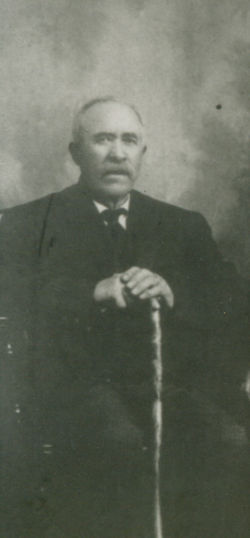
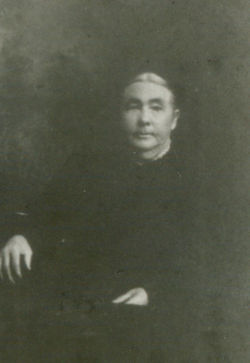
Like many Irish, he first settled in Clinton, Massachusetts. There, he met Catherine Finnerty, also from Galway, but who had arrived earlier, in 1842. They married in 1851.
But life in eastern cities offered little relief. The Irish slums were crowded, dangerous, filthy places. Work was scarce. Signs reading, “No Dogs! No Irish!” were common. Anti-immigrant and anti-Catholic sentiments surged, leading to violence and movements like the Know-Nothing Party.
So, like many others, they fled and headed West.
In 1855, around the same time that Thomas Francis Meagher was speaking and writing essays encouraging the Irish to move West, Michael and Catherine relocated to Wisconsin, for land, work, and fresh air. That same year, their son, Michael Eugene Joyce, was born. They had eleven more children.
Nearly three decades later, in 1884, when Michael was 55 years old, Michael and Catherine pressed still further west to the Dakota Territory, homesteading near Burdette, South Dakota.
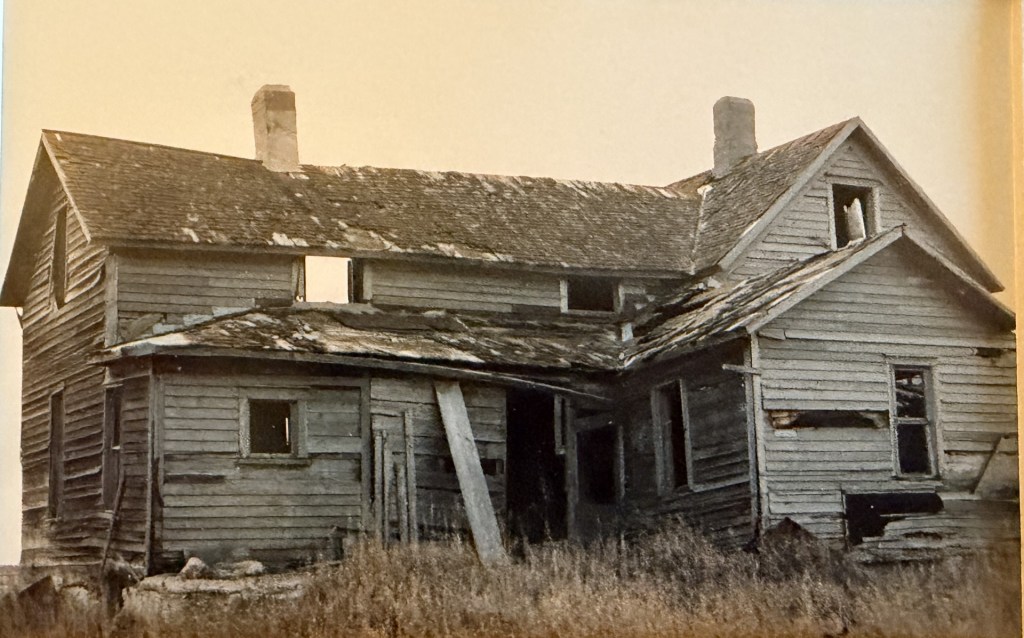
Northeast South Dakota would have been a brutal place in 1884. Blizzards, locusts, droughts, prairie fires. Even Sioux Falls, further east and further south, was little more than a scattering of buildings and tents. They lived in a sod shanty and burned cow chips as heating fuel. There were no trees. Eventually, Michael, a blacksmith, forged his own tools by hand – and with them, he and his sons built a home on the ocean of grass.
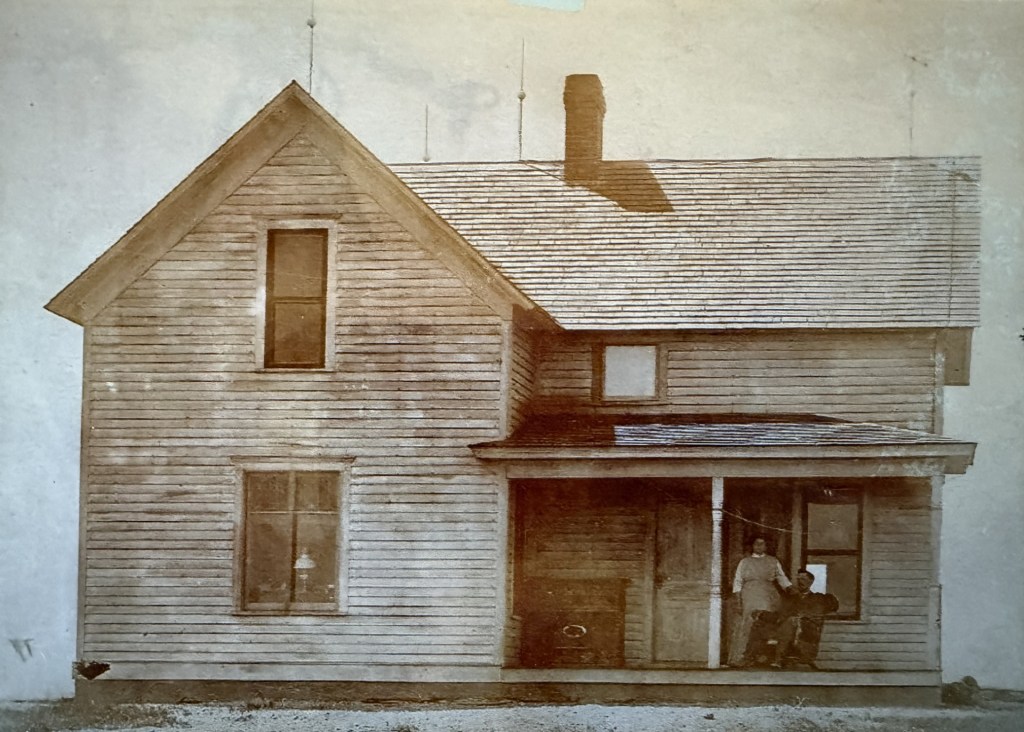
In 1887, Michael Eugene married Rose Ann McDonald. They worked and raised ten children: two daughters who became nuns, Sr. Frances Therese (Miles City, MT) and Sr. M. Thomas (Bridgewater, SD); Gertrude and Grace, who never married and lived and farmed on the family homestead their entire lives; Mark Joyce and Donald Joseph Joyce, who continued to farm in the area.
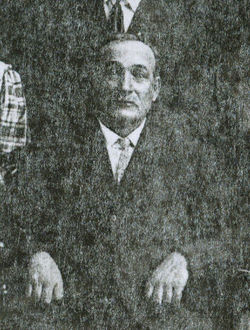
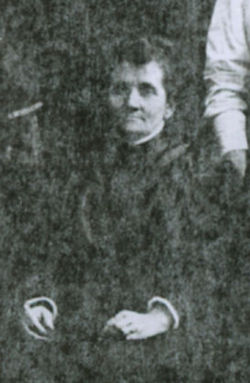
One of those sons, Donald Joseph Joyce, born in 1891, married Rose Carpenter, born in 1892. Among their children was Donald James Joyce – Mark’s grandfather. Donald Joseph passed away in 1957, but he leaves behind a memory of a stern man with a thick black mustache, seated in his favorite chair after Sunday mass and dinner, smoking a cigar.
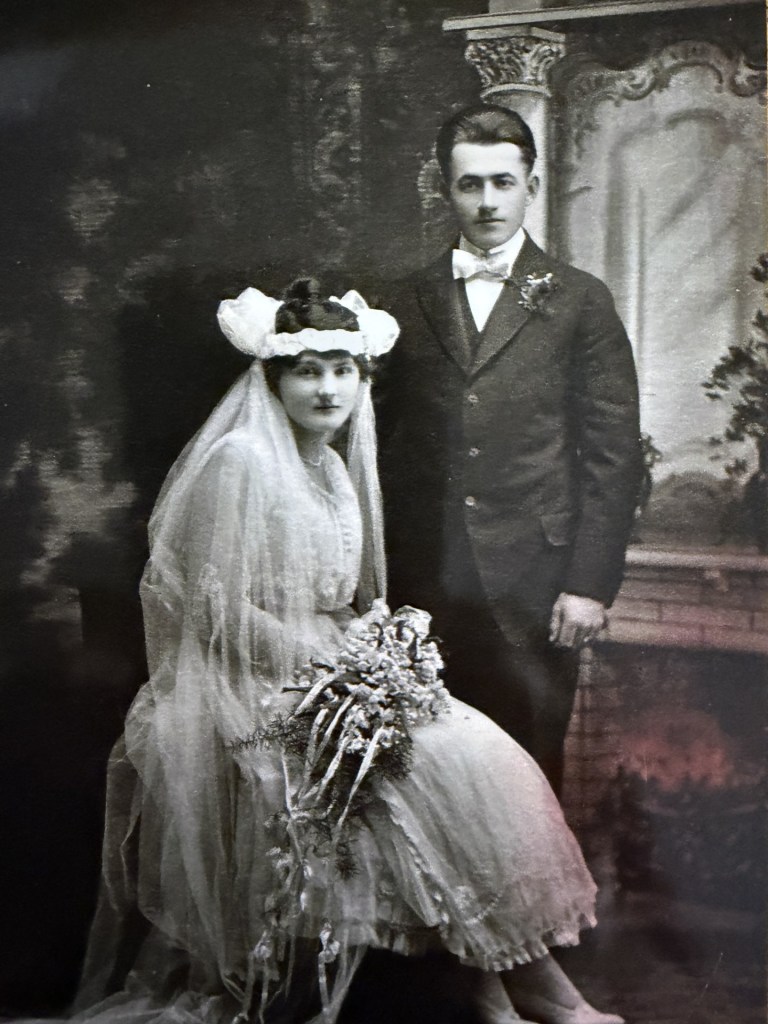
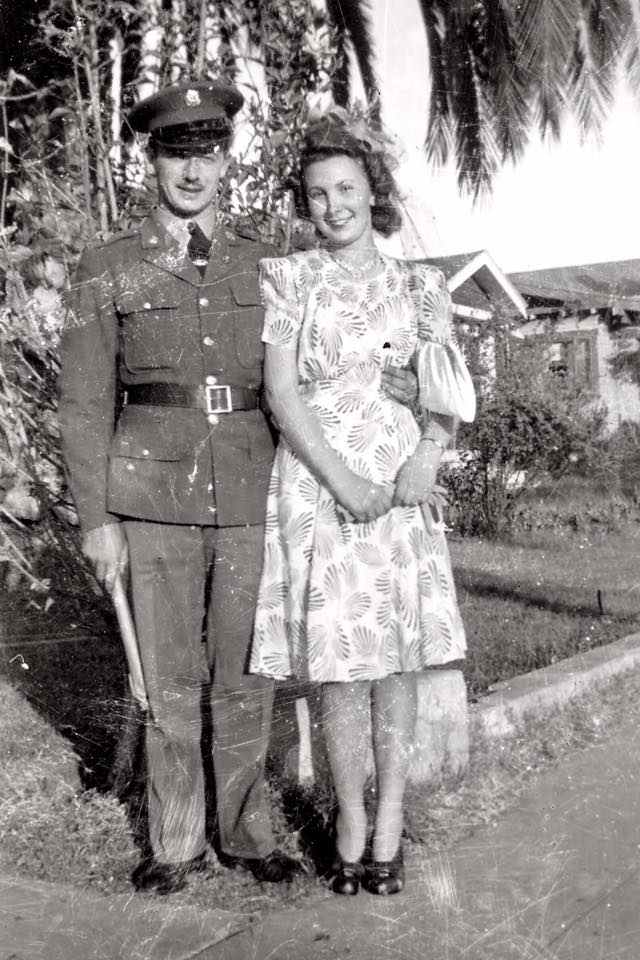
In 1941, Donald James was headed off to war. While preparing to be shipped out from California, he married his seventeen year-old sweetheart, Argie Schmidt, who came prepared for the ceremony with a note of permission from her father. After four years as a medic in the Pacific Theatre, Donald James headed home on the USS Randall. They had six children – among them Donald Randall, Mark’s father.
Time and people, as it does, moved on.
In the 1970’s, Gertrude and Grace, the last of the Joyce sisters, moved off the homestead. The house stood empty, weathered by prairie winds, and then slowly picked apart by time and neglect. Before it was lost entirety, Donald James and his son – Donald Randall, Mark’s dad, returned to salvage what they could.
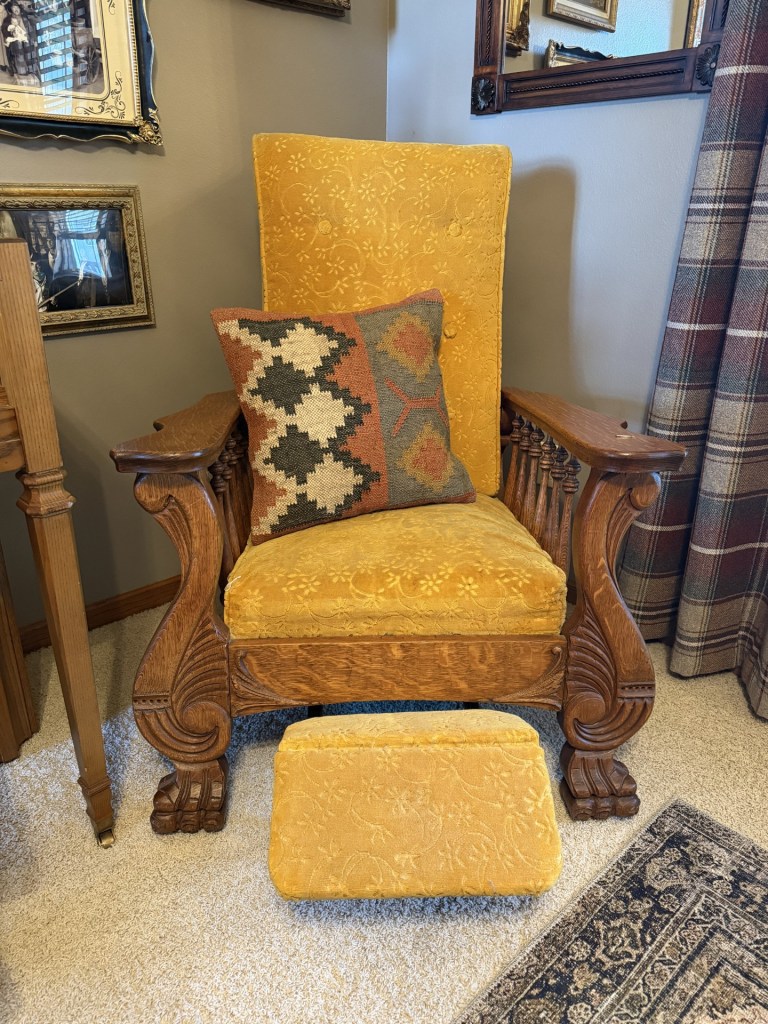
They brought back pieces of the past. First, Donald Joseph’s favorite chair, a hand-carved recliner that made its way across the forests and prairies of Wisconsin and Minnesota and South Dakota in the back of Michael and Catherine’s covered wagon in 1884. That chair proudly sits next to our piano, right inside the front window, just as it was in Donald Joseph’s and Rose’s home. And a few cottonwood beams, hand-hewn from rare prairie trees by Michael Joyce himself. Today, those beams live again as the mantle for our fireplace.
Thomas Francis Meagher once said, “There is no strength greater than hope, and no power greater than love.” It’s hard to imagine a better summary of the Irish spirit that carried the Joyces across an ocean and halfway across a continent in hopes of a better life.
It is easy at times, to wonder what all of it was for – to look at the world as it is and feel the weight of it. But the truth is, the Joyces did not cross an ocean or a prairie to find something perfect. Far from it. The world – and the country – they entered was hard, uncertain, and often incredibly unfair. Still, they stayed. They worked. They built. They believed. They raised families and put down roots in soil that promised them nothing.
The hope did not come easily then, and it does not always come easily now. But, from famine to frontier, from Galway to the Dakota Territory, from 1847 to 2026, the story continues on. And so do we – quietly, stubbornly, carried forward in faith practiced, homes built, children raised, and stories remembered.
Slainte!
 Prairie Papers & Effects
Leave a comment