Mark loves Braveheart. Every time he watches it, I remind him, “You’re not even Scottish. I am!”
I have to admit, though, I do love when William Wallace gives his version of the Saint Crispin’s Day speech and yells, “FREEDOM!” as he dashes with his outnumbered army into a bloody battle.
But, enough about William Wallace. Let’s fast forward about four and a half centuries – for a different Scottish William.
In the mid-1700’s, Scotland was experiencing something of a Renaissance. While still adjusting to the 1707 Union with England, it was also experiencing educational, scientific, cultural, and demographic changes. The Highlands still largely maintained their traditional structures, while urban centers were expanding and becoming more dynamic.
So, why would a young man leave all that behind – everything he had every known – to cross an ocean to the boisterous English colonies?
Well, love. And freedom.
William Thomas Bickett was born on December 2, 1742, in Kilmarnock, Scotland. Family lore has it that he was something like minor Scottish gentry, at least, that is, until he fell in love with an Irish Catholic girl, Jane Hart, born in 1755 in Northern Ireland.
William, the Scottish Protestant, married Jane, and was promptly disinherited.
He converted to the Catholic faith, which he practiced and passed on to their many children.
She must have been something.
With nothing left to lose, the impetuous William and his Irish bride set sail for the American colonies in either 1760 or 1773, depending on what you read. He reportedly came as a bond servant to James Starr and arrived in Philadelphia, Pennsylvania.
Family lore has it that his two brothers, equally outraged by the disinheritance, packed up and traveled with him.
On March 21, 1778, William took an Oath of Allegiance to the United States. He served in the 50th Regiment of the Maryland Militia during the American Revolution.
I wonder how that landed with him. Did William feel any hesitancy about taking up a sword against Britian and the English Crown? Or, as a Scotsman, in the vein of William Wallace, was he more than ready for that fight?
William was formally discharged from the Maryland Militia on May 5, 1796. He then served as a Justice of the Peace for Frederick County, Maryland from 1777-78.
In 1790’s, William, Jane, their children, along with the Livers, Elder, Hughes, Flanagan, Barnes, and perhaps other families, made their way West to Kentucky through the Cumberland Gap.
On March 15, 1798, Nathaniel Bickett was born in the Cumberland Gap. Allowing Jane to recover, the family camped in a grove of maple trees and produced enough sugar to last through their first year in Kentucky.
She must have been something.
The family eventually settled at the Catholic settlement of Raywick on the Rolling Fork River – at that time a trading post called “Sheep’s Defeat,” thanks to the steady loss of sheep to wolves, dogs, and other animals.
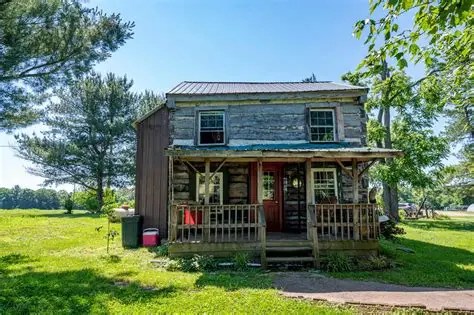
William built a log home on 160 acres of land he had acquired.
William died in his log house, which still stands today, near Raywick, Kentucky, in a time of deep snow at the age of 82.
He died without a will, his land having been divided up among his sons before his death, except for the original 160-acre homestead. This land, and his other property was sold for the benefit of all the heirs. Samuel Bickett, son of William Bickett, bought the land and the house and all the buildings for $355. This land stayed in his line from 1830 to 1900.
In 1878, William’s great, grandson, John Phillip Bickett – born in Kentucky on January 20, 1849 – married Mary Elizabeth Payne, born in Kentucky, on November 5, 1863.
They had fifteen children. Only eight lived to see adulthood.
Mary buried seven children – when they were days, weeks, months, or a few short years old.
Among their eight children who survived was Arnold Leo Bickett, my grandfather. Arnold Leo fought in WWI. A teenager from rural Kentucky with very little formal education, he found himself in the Meusse-Argonne Offensive, the worst place in the worst war. Some units sent in hundreds of men and saw only a dozen return. Truly. We can’t imagine.
He was tall man. The trenches were not deep. He must have spent two years bent over at the waist.
He didn’t talk much about the Great War, but he would open up about it later in life. He once told my dad a story how he and another solider were bringing a vat of soup from end of the trench to the other across open ground. A German sniper shot the other man. He joked, “If that German had moved his gun 1/2 an inch, you kids would all be Norwegians!”
When he got back from the Great War, he headed to Illinois to marry the girl who had been waiting for him. He didn’t find her. She had died in the Spanish Flu.
Somehow, he made his way to Beresford, South Dakota, as a hired man. Maybe he went back to western Kentucky first – only to find violence and bootlegging – and decided that he hadn’t survived a European trench just to die at the wrong end of a machine gun at home.
On a farm near Beresford, he fell in love with the farmer’s teenage daughter.
One Christmas, he went to town and bought her a silver mirror and brush.
A tall man, with a Kentucky drawl. Back from the Great War. Played the fiddle and harmonica at dances on Saturday nights. And he bought her a silver vanity set, spending nearly all the money that he had.
She must have been something.
They had nine children, including my mom. They did well. They were never wealthy, but they owned their farm. They were never hungry. They always had a nice Christmas and an education at the Catholic school.
In the words of William Wallace, “I tell ye true, liberty is the best of all things.”
William Bickett, a Scotsman, embraced and lived out those ideals in the most American of ways.
Freedom to love.
Freedom to marry.
Freedom to pray.
Freedom to move.
And the women who inspired it all.
They must have been something.


Leave a Reply